

Today’s post is a light one and I will be writing about how to make sure that you never compound your wealth. There is a popular method that has been written by famous investors, market participants, economics experts and the like. That method to kill compounding is very easy to grasp.
Buy at the top and sell at the bottom.
Now the popular emotion that allows us to behave in this manner is none other than fear and greed.
For example, when the market plummets like what we saw in Indonesia in June 2026, the fear disguises as prudence and we’d say to ourselves (sometimes in panic):
“I want to minimize my loss because the stocks can go down in price further,”
When the market reaches an all time high, the greed disguises as opportunism and we’d say to ourselves:
“I want to maximise my gains because an opportunity like this is rare, it’s different. It has never happened before. There is no risk”
Well, that is fear and greed in action and we know that these two folks are great at killing compounding. But I’d like to surface two more emotions that are also effective at killing compounding.
Spoiler: by virtue of our language, Indonesians will have it easier in understanding these emotions.
Before that, let me show you a flowchart of an investment process
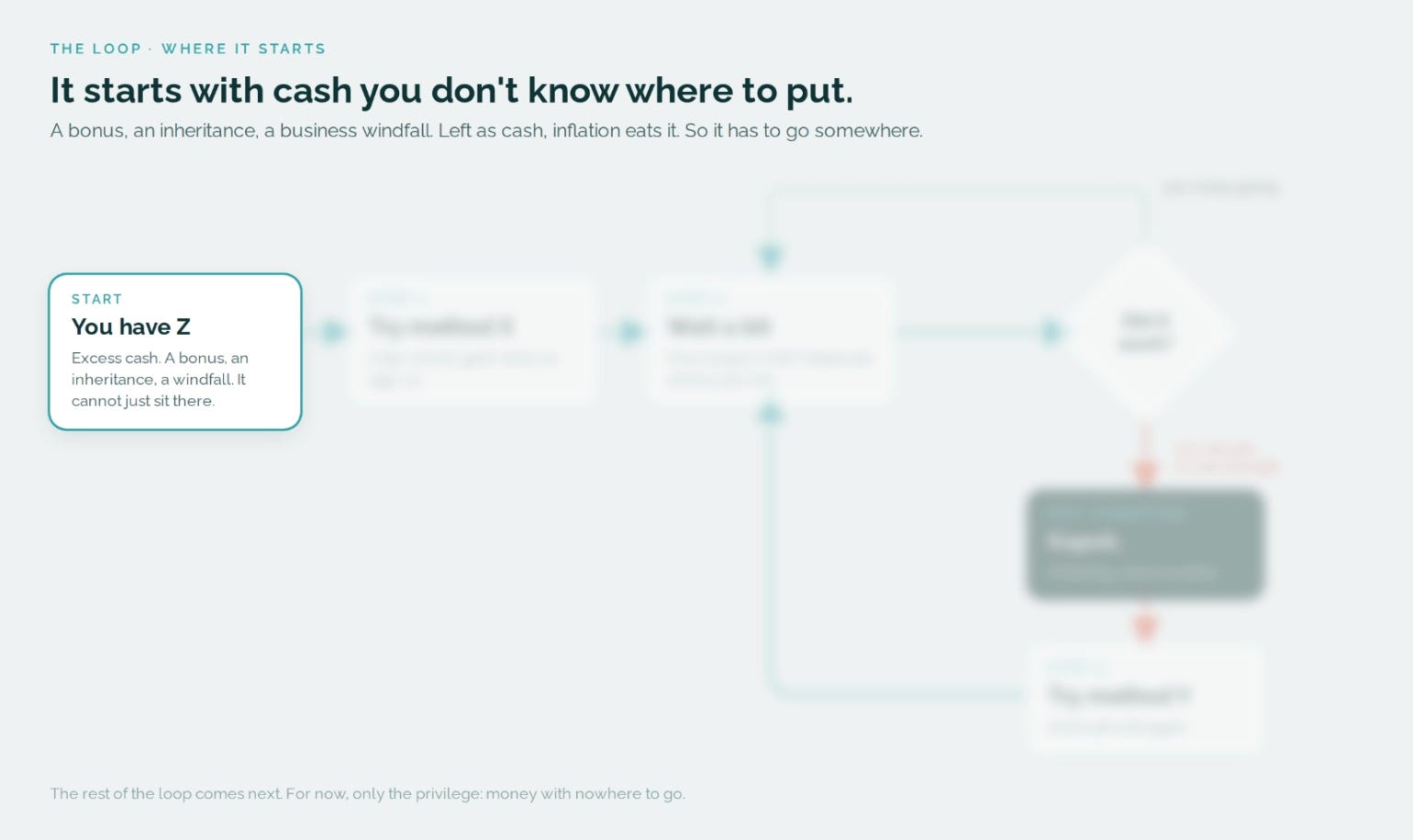
In of itself, investing is a good problem. It is good because at the very least we know that we have wealth in the moment. But it is still a problem because it usually means we don’t know where to put the excess cash. For example we got a huge bonus or a huge inheritance or a huge business windfall and so on. If we let it sit in cash, it will be eaten by inflation.
So that’s where we begin. We assume that the excess cash amount is Z.
Step 1: Method Selection
Now we will look for all sort of investment solutions to solve this problem. It could be one or a mix of:
buying mutual funds
stocks DIY
buying bonds
participating in cryptocurrency
index funds
algo trading
hodling precious metals and so on (kos2an, sell put options, rolex, artwork, fractionalised property gosh there are so many investing options nowadays isn’t it)
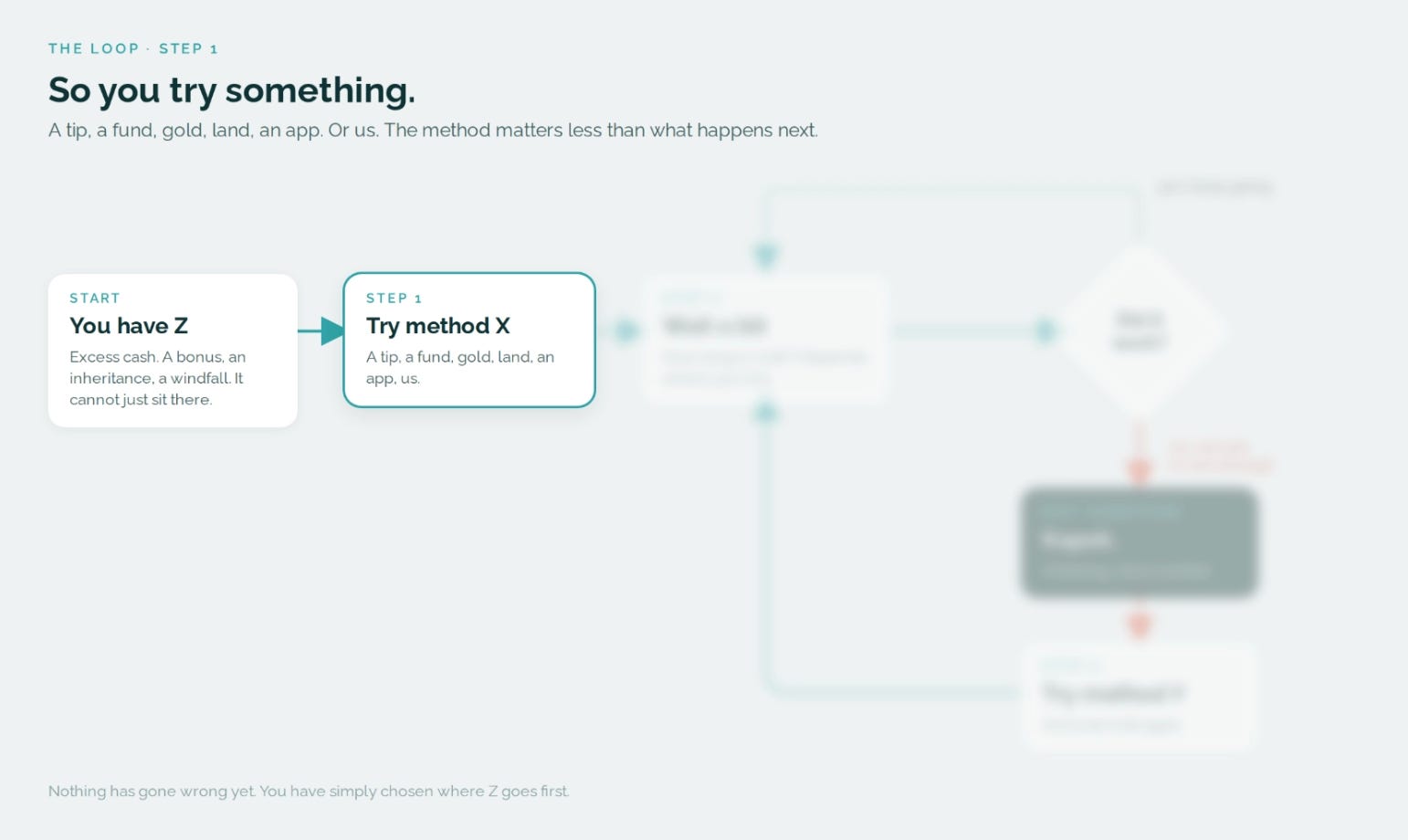
So lets assume that you settle with a method that seems appealing you most at the start. We call that, method X.
Step 2: Wait a bit
After the selection of method X and making your investments, perhaps from a combination of:
heavy binging of YouTube videos
asking your financially savvy friend
looking at threads or twitter
downloading popular wealthtech apps
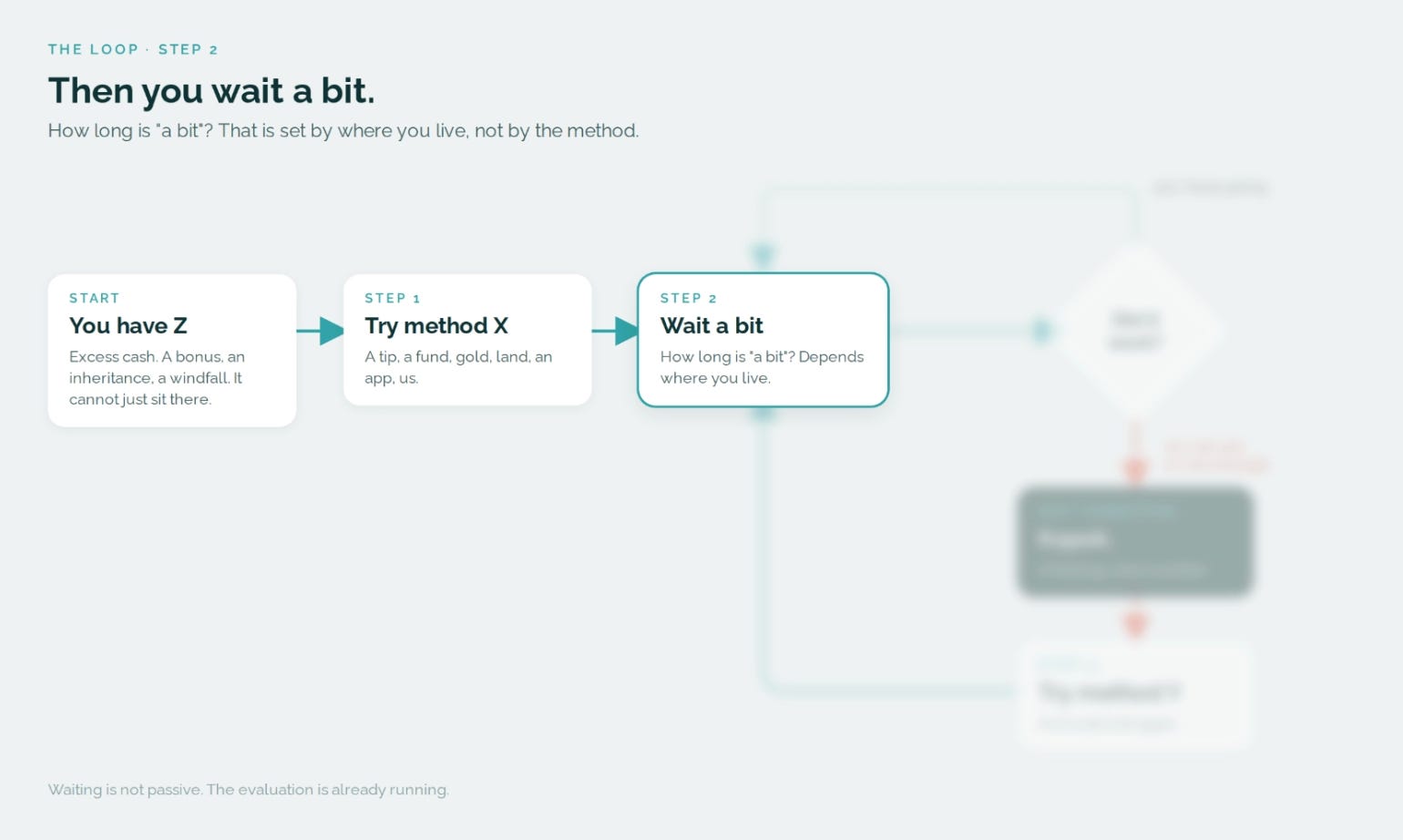
It is time for you to do the most boring part. Waiting..
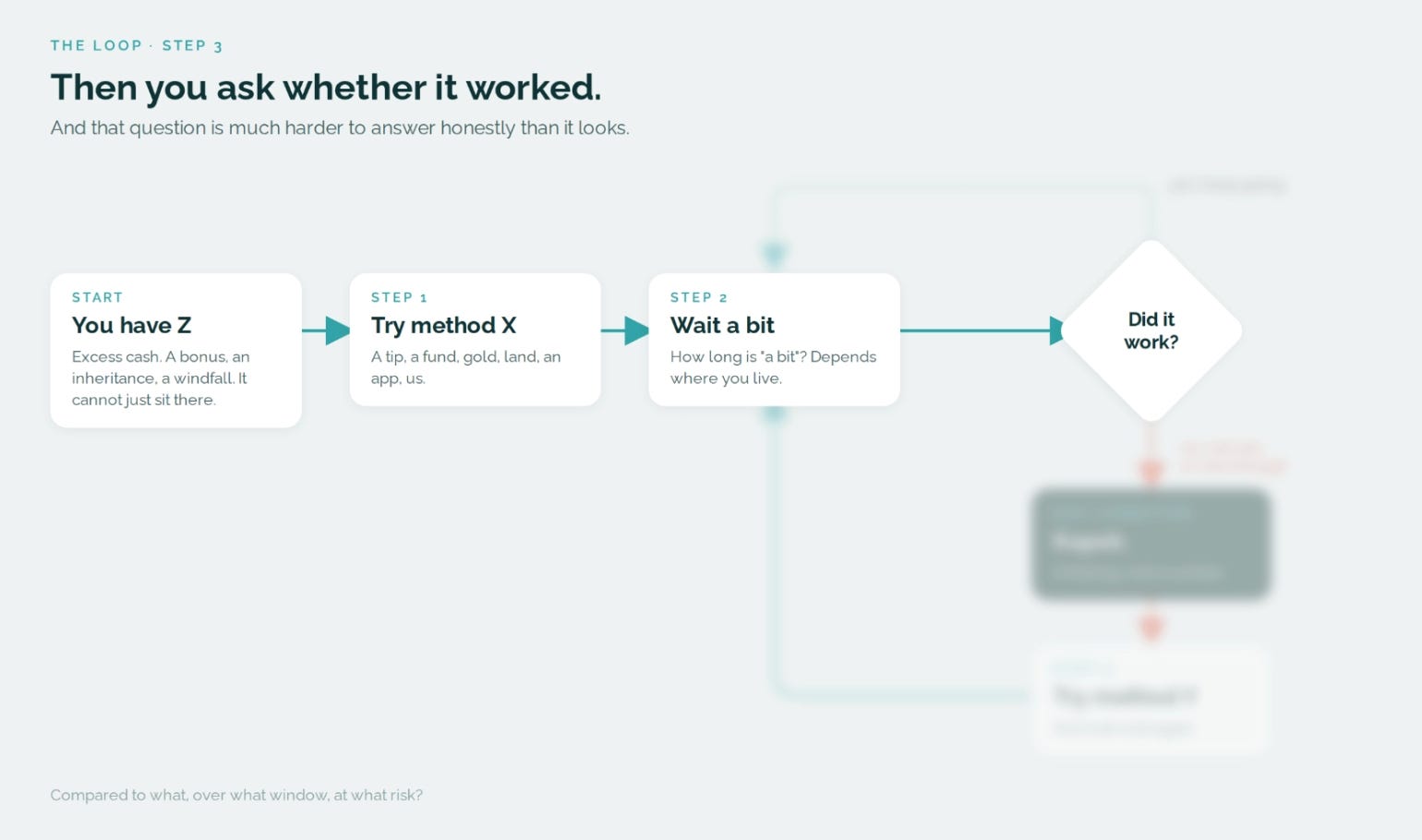
Step 3: Is it working?
At the start, you are still eager to check your investment performance and progress. You open the app, look into coverages to your investments in social media if any. And so on. Essentially you are into the phase of asking yourself.
“Is my investment working?”
It is a simple yes or no question.
Step 4: Darn it, it is not working.
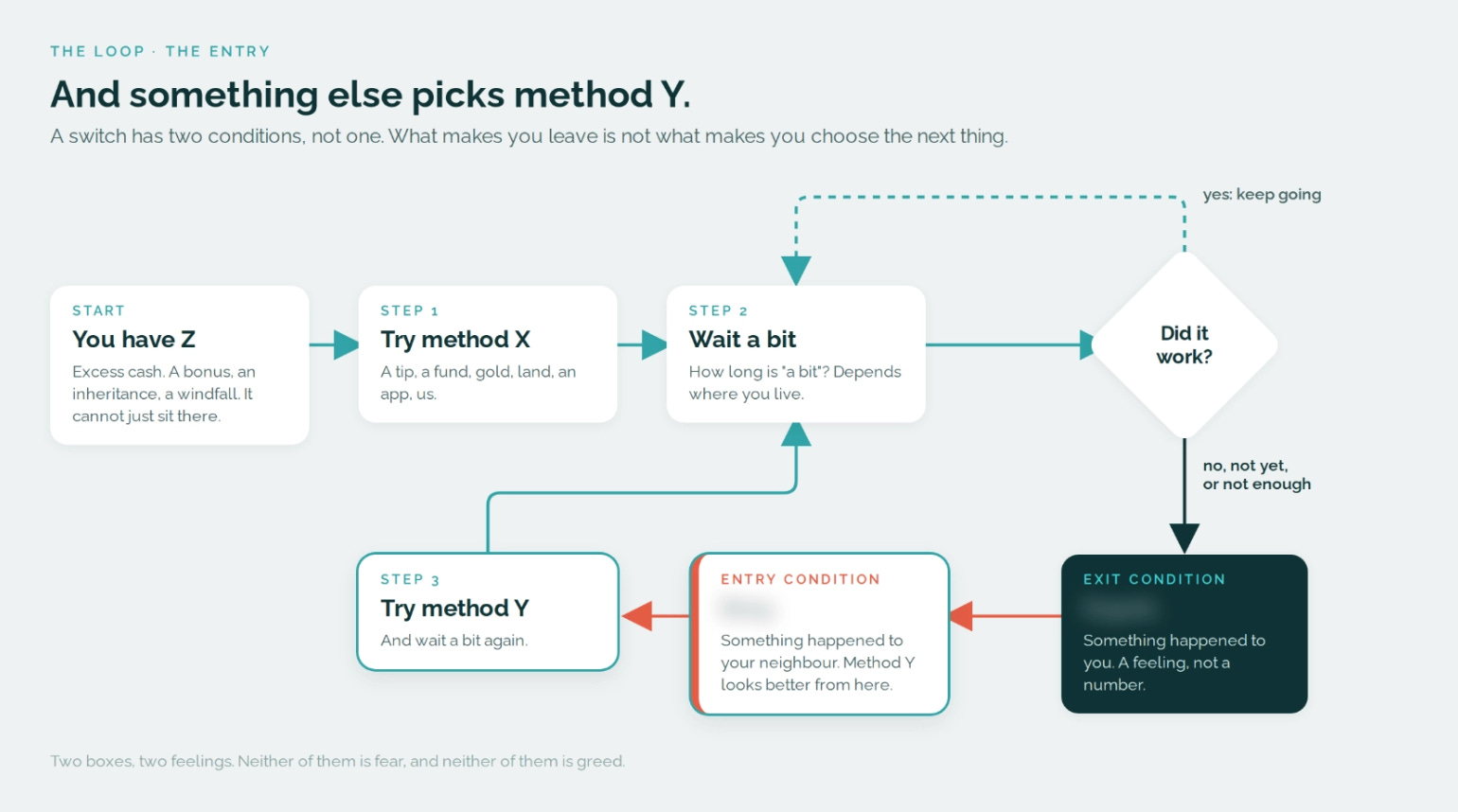
An investor rarely gets a method X that works for them the first try. Usually caused by a combination of ego, inexperience, ignorance (basically being a normal human being). So there will be an exit from method X.
But the excess cash Z’ is still a problem. So there needs to be a new method Y that replaces the old method X. And usually, that new method Y is gated by an entry condition.
So two emotions that are effective in killing compounding
Lets be precise here. The thing that will guarantee you to kill the compounding are these two emotions that governs your exit condition from method X and your entry condition to method Y respectively.
These two emotions (like fear and greed) appear to go hand in hand.
One emotion governs the exit condition for method X. That emotion is kapok.
In English, kapok would be the feeling of saying to yourself “never again”. Knowing Bahasa Indonesia certainly does help here.
Another emotion governs the entry condition for method Y. That emotion is envy.
Why they come as a pair
Kapok does not just end method X. It changes the problem you walk into method Y with.
At the start, the problem was “where do I put Z”. After kapok, the cash is likely smaller, call it Z’ and the problem is no longer “where do I put Z’”.
It is “how do I get back from Z’ → Z, quickly”.
Psychologists have measured what that does to people. Someone who is underwater takes more risk than someone who is above ground. It is the same reason a gambler who is down at midnight is likely to make riskier bets at 1AM.
Now, a person who is looking for a quick recovery needs a candidate. Envy supplies with one. Note what kind of candidate envy supplies. Not a random method. The method that has just gone up the most, in someone you can see. Which is precisely the method that is most likely to be at its top.
I’d argue that the emotions aren’t disjointed. They are more like supply and demand. Kapok creates the demand for a fast recovery. Envy supplies the fastest looking one.
“Bro gua invest di sini baru setahun cuan udah 50%” - ”Bro I invested here for a year and I am up 50%”
Neither does the full damage alone. Kapok without envy usually ends up in uninstalling your sekuritas app or liquidating all of your investments and putting them back into your savings account.
Envy without kapok is a temptation you can sometimes resist, because you are not underwater.
Together, they are a potent combination to kill compounding. Kapok is the sell at the bottom. Envy is the buy at the top.
And then method Y, bought at the top, is the one most likely to produce the next kapok. Kapok, envy, kapok, envy. Each round the drawdown is a bit deeper and the recovery has to be a bit faster.
Closing remarks
Enough cycles of kapok and envy in my experience produces something that puts a nail in the coffin for most investors. That is financial trauma. This can entail pronouncing a whole class of assets as a sham.
All of the sudden, investment universe of an investor becomes smaller and smaller. All the way until the investment vehicle they have to help them compound their wealth is pretty much nothing.
So I am not going to ask you to feel less kapok or less envy. Nobody can do that on request. I certainly cannot.
What you can do is to see the fuel for each emotion.
Envy needs a neighbour. Fewer methods in view means fewer neighbours, and fewer neighbours means less envy. This is case in point where having fewer options beats having more. For example, mute the group chat where the cousin posts his screenshots. That counts as an intervention.
Kapok needs a clock. Decide the date, call it a deadline, on which you will judge method X, and put it in your Google calendar. Until that date, “is it working?” is not an open question. Not because you are disciplined. But because you’ve set Google calendar.
Neither of these requires you to be a better person tomorrow in “controlling your emotions”. I certainly don’t quite believe in being able to do so. Maybe a post on this next time.
Cheers.
Disclaimer: Everything in this post is my personal opinion, written for educational purposes. It is not financial advice, and nothing here is a recommendation to buy, sell, hold, or switch between any security, asset class, or investment method. The neighbour and his 35% are illustrative, not a real return, and nothing in this post suggests that any method will beat any other. Noticing kapok and envy does not remove them, and no approach guarantees against loss. Please do your own research and consult a licensed professional before making investment decisions.